
 Dogs
 Cats
 Fish & Aquatics
 Reptiles
 Small Pets
 Horses
 Article
 Birds
Pet Bird Halloween Safety: Getting Your Flock Through the Doorbell Marathon
Doorbells, candy bowls, and flickering jack-o'-lanterns make Halloween one of the riskiest nights of the year for a pet bird — here's how to get your flock through it calmly and safely.
Published October 10, 2026
Halloween asks a lot of a prey-brained flock animal. The doorbell won't stop ringing, strangers in strange shapes keep appearing at the front door, and the kitchen fills up with candy your bird should never go near. None of this is obvious if you've never had to think about trick-or-treat night from a parrot's point of view.
The good news is that almost every Halloween risk to a pet bird is preventable with about twenty minutes of setup before the first knock. Here's what actually matters, broken into the three phases of the night.
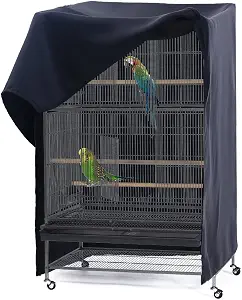
PONY DANCE Universal Birdcage Cover Blackout & Breathable
Blocks both light and a meaningful amount of sound, so the doorbell marathon and parade of costumes stay muted — drop it over the cage the moment trick-or-treating starts.
- ✓ Adjustable front panel
- ✓ Heavy-duty triple-woven fabric
- ✕ Runs large for smaller cages
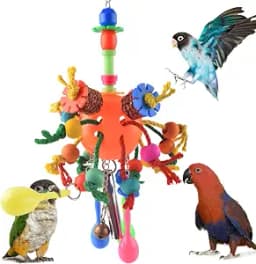
KATUMO Bird Toys, Parrot Toys Parakeet Foraging Shredder Hanging Toys Bird Ball Treats for Conure Mini Macaw Cockatiel Lovebird Small-Medium Birds
Loaded fresh before dusk, this keeps curious beaks busy shredding and pulling instead of fixated on every doorbell ring.
- ✓ Bird-safe mix of wind chime, bell, and wooden beads built into one hanging ball
- ✓ Encourages birds to chew, forage, pull, scratch, and shake for mental and physical workout
- ✓ Stainless chain and hook make it easy to hang anywhere in the cage
- ✕ Small parts could be a choking risk if your bird is an aggressive destroyer
Phase One: Set Up Before Dusk
Birds do best with a plan made before the chaos starts, not during it. The single most effective thing you can do for a sensitive bird — a cockatiel that already plucks when stressed, a nervous conure, a parrot that's never loved strangers to begin with — is to move its cage to the quietest room in the house for the evening, ideally one that isn't directly off the front hallway. If moving the cage isn't practical, having a proper cage cover ready to drop into place the moment the doorbell starts will do almost as much work.
Set out the Halloween candy bowl, any jack-o'-lanterns, and seasonal snack spreads now, while you can still keep an eye on exactly what's where. It's much harder to track hazards once the house fills up with guests or trick-or-treaters start arriving every few minutes, and that's precisely when a bird is most likely to end up near something it shouldn't.
The Hazard Hiding in the Candy Bowl — and the Guacamole
Every bird owner has heard that chocolate is off-limits. Theobromine is toxic to virtually every companion animal, birds included, and even a small amount scavenged from an unattended wrapper can cause serious illness. That part isn't news to most people.
What catches far more owners off guard is avocado. If your Halloween spread includes guacamole, avocado toast, or anything built around avocado, it needs to stay completely out of your bird's airspace — not just off its plate. Avocado contains a compound called persin that is, by all evidence, uniquely dangerous to birds in a way it simply isn't to dogs or cats. In birds, persin exposure has been linked to respiratory distress, fluid buildup around the heart, and sudden death, sometimes from what looks like a very small amount. It's one of the least-known serious food hazards in pet bird care, precisely because it isn't on anyone's general "toxic foods" radar the way chocolate or onion is. If avocado is anywhere in your Halloween menu, treat it the way you'd treat an open flame: not near the bird, not near the bird's room, and cleaned up immediately rather than left out on a counter the bird might later be carried past.
Smoke, Flicker, and the Doorbell Marathon
A bird's respiratory system is far more efficient — and far more sensitive — than a mammal's. Air moves through a bird's lungs in a continuous one-way flow rather than the in-and-out exchange mammals use, which is part of why birds can suffer serious, sometimes severe reactions to fumes that a person standing in the same room wouldn't even notice. Burning jack-o'-lantern candles and any smoke from Halloween decorations should stay in a room your bird doesn't share, with the door closed, not just positioned "across the room" from the cage.
Then there's the doorbell itself. Repeated door-opening on Halloween night means repeated blasts of cold air and swinging temperature as the door opens and closes all evening, which isn't something a caged bird can escape or regulate for itself the way a dog or cat can simply walk to another room. Combine that with a doorbell that won't stop and a parade of costumed strangers — genuinely strange shapes, to an animal that reads the world largely through silhouette and sudden movement — and you have a real recipe for acute stress. In sensitive birds, that stress doesn't always look dramatic in the moment; it can show up over the following days as feather-picking, screaming, or a bird that suddenly won't settle at bedtime.
Products That Help
You don't need much gear to get a bird through Halloween comfortably, but two things consistently make the biggest difference:
- A proper blackout cage cover — draping a towel over the cage is better than nothing, but a cover built for the job blocks both light and a meaningful amount of sound, which is exactly what a bird needs when the doorbell is going off every few minutes. Drop it over the cage from the far side of the room so the bird isn't watching you loom over it right as the noise ramps up.
- A foraging toy loaded fresh that afternoon — a bird that's busy shredding, pulling, and working for a treat is a bird with its attention on something other than the front door. Set it up before dusk so it's already a familiar, calming activity by the time trick-or-treaters start arriving.
A Short Halloween-Night Checklist
- Move the cage to the quietest available room, away from the front door, or have a blackout cover ready to use the moment things get loud.
- Keep all candy — and anything made with avocado — sealed, cleaned up promptly, and never left on a counter the bird can be carried or flown near.
- Burn candles and light jack-o'-lanterns only in a room with the door closed to the bird's space.
- Give your bird a foraging toy or chew to redirect its attention during the busiest trick-or-treat hours.
- Check in on a sensitive bird the next morning — new feather-picking or unusual quietness is worth a call to your avian vet.
Our pick
If you only do one thing this Halloween, make it this: give your bird a quiet room, a covered cage, or both before the doorbell starts, and keep every scrap of chocolate and avocado sealed away from the moment it enters the house. Everything else on this list is damage control for the things a covered cage and a closed kitchen door already prevent.