
 Dogs
 Birds
 Fish & Aquatics
 Reptiles
 Small Pets
 Horses
 Article
 Cats
Halloween Safety for Cats: The Real Risks (and What Actually Helps)
Doorbells, strangers in masks, candy on the counter — here's what's genuinely dangerous for your cat this Halloween, and what's just spooky-season hype.
Published October 10, 2026
Halloween is a strange night from a cat's point of view: the doorbell won't stop ringing, strangers in masks keep appearing on the porch, and the house smells like candy, candle wax, and fake cobwebs. None of that is inherently dangerous on its own — but put it together and you get the single biggest cause of Halloween cat emergencies: an open door and a spooked cat. Here's what's actually risky tonight, and what's mostly internet hype.

Native Pet Cat Calming Treats - Chicken Flavored Calming Chews for Cats
A vet-developed calming chew built around L-tryptophan and hydrolyzed casein — give one 30-45 minutes before the doorbell traffic starts to take the edge off a cat already anxious about strangers.
- ✓ Vet-developed with L-tryptophan and hydrolyzed casein
- ✓ Dual-texture chew most cats find palatable
- ✓ NASC certified
- ✕ Needs to be given ahead of the stressful event to work best
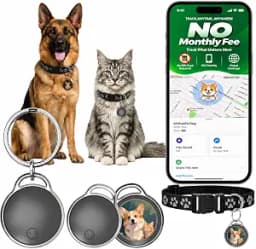
GPS Tracker for Dogs/Cats, Real-Time Tractive GPS Tracker Device
A no-subscription GPS tracker that clips onto a collar, so if a cat does bolt out the door during trick-or-treating, you get a real-time location on your phone instead of a frantic search.
- ✓ No monthly fee or SIM card required
- ✓ Real-time location with 7-day history
- ✓ IP68 waterproof
- ✕ Small/light cats may need a lightweight collar to carry it comfortably
The Real Risk Isn't the Costume — It's the Door
Veterinary ERs don't see much of a spike in Halloween poisonings so much as a spike in "my cat got out." Every time the doorbell rings and you open the door to hand out candy, you're giving a startled, cold-averse animal a direct shot at the street. A cat that's never shown any interest in escaping before can bolt the second a group of costumed kids starts yelling "trick or treat" on the porch.
There's also a darker side to this holiday worth knowing about: black cats are sometimes targeted for cruelty or pranks around Halloween, which is why many shelters quietly pause black cat adoptions for the last week or two of October. If you have a black cat, this is one more reason to keep them inside and away from the door entirely on the 31st — not just confined, but out of sight of anyone who rings the bell.
The fix is simple and it's the single highest-leverage thing you can do all night: set up a closed-door "safe room" — a bedroom or office with food, water, a litter box, and bedding — and move your cat there before the first trick-or-treaters arrive. Tape a sign to your front door reminding family members not to let the cat out. And double-check that your cat's collar ID and microchip info are current; if a cat does slip past you in the chaos, the gap between "missed curfew" and "home safe" usually comes down to how fast someone can identify them.
What's Actually Toxic on Halloween Night
Once the safe room is sorted, the chemical risks are the same ones that show up around any candy holiday:
- Chocolate — toxic to cats the same way it is to dogs, affecting the heart and nervous system; darker chocolate is more concentrated and more dangerous.
- Xylitol — the sugar substitute in sugar-free gum and some candies; it's extremely dangerous even in small amounts.
- Candy wrappers — cats are far less likely to eat candy itself than dogs are, but a crinkly wrapper on the floor is an attractive toy that can cause choking or an intestinal blockage if swallowed.
Keep the candy bowl on a high shelf rather than a low table, and do a quick wrapper sweep of the floor before bed — it takes thirty seconds and removes most of the real risk.
The Costume Question
A lot of Halloween content pushes cat costumes hard, but most cats genuinely don't enjoy wearing them, and plenty will twist, scratch, or chew at a costume aggressively enough to hurt themselves or get a limb tangled in it. If you do dress your cat up for a photo, keep it brief — a few minutes, supervised the entire time — and skip anything with small attachable pieces, elastic that could ride up around the neck, or anything covering the face or whiskers. (If costumes are actually your thing, we've got a separate roundup of the better cat Halloween costumes — this guide is more about what to watch out for than what to buy.)
Decorations That Look Like Toys (But Aren't)
This is the hazard most people miss entirely. Fake spiderweb decorations and any kind of ribbon-like string decor are a genuine linear foreign-body risk — cats are notorious for swallowing string, thread, and stretchy synthetic webbing, and once it's swallowed it can anchor in the stomach or intestines and require surgery to remove. If you're decorating, keep stretch-web material up high and out of batting range, or skip it in cat-accessible rooms entirely.
Glow sticks and glow jewelry are less scary than they look: the liquid inside tastes intensely bitter, so a cat that bites one usually drools dramatically and stops immediately. It's rarely dangerous, just unpleasant for everyone involved — but it's still worth keeping them away from a curious cat if you can.
Setting Up a Calmer Halloween
Here's the short version, roughly in order of how much it actually matters:
- Set up a closed-door safe room with food, water, litter, and bedding before the first doorbell rings
- Confirm your cat's collar tag and microchip info are current
- Keep candy on a high shelf and sweep wrappers off the floor
- Store fake spiderweb and string decorations out of paw's reach
- Skip the costume, or keep it to a few supervised minutes
A couple of products are worth having on hand if your cat gets visibly rattled by the door traffic. Native Pet's Cat Calming Treats use a vet-developed blend built around L-tryptophan and hydrolyzed casein (the same calming compound found in milk), and giving one about 30-45 minutes before the first doorbell rings can take the edge off a cat who's already anxious about strangers. And if the worst does happen and a cat does get out the door during the chaos, a small clip-on GPS tracker gives you a real-time location on your phone instead of a frantic neighborhood search — it's the kind of thing you hope you never need, but it turns a potential nightmare into a quick drive to go get them.
Our pick
Chocolate and costumes get all the attention, but the thing most likely to actually hurt your cat on Halloween is a door that opens one too many times. Set up a safe room before the first trick-or-treater arrives, double-check your cat's ID, and the rest of the night is mostly just candy management.