
 Dogs
 Birds
 Fish & Aquatics
 Reptiles
 Small Pets
 Horses
 Article
 Cats
Getting Your Cat Through New Year's Eve Fireworks
A practical, hour-by-hour plan for the one night of the year most likely to send your cat into hiding — or out the door.
Published October 10, 2026
New Year's Eve is unusual among the holidays in this series because the risk isn't something your cat might eat — it's noise. Fireworks, especially the unpredictable kind set off by neighbors rather than a scheduled show, can turn even a confident cat into a bolting, hiding, stressed-out mess for hours. Here's a practical plan for getting through it, built around the three things that actually help: a secure space, reduced stimulation, and not forcing interaction.
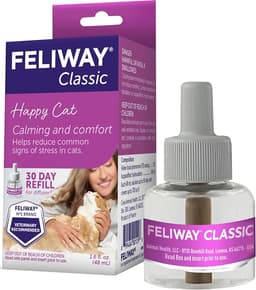
FELIWAY Classic Cat Calming Pheromone Diffuser Refill - 1 Pack
A synthetic feline facial pheromone diffuser that helps a room read as "safe territory." Start it the day before New Year's Eve — it works gradually, not instantly.
- ✓ Not a sedative, safe for continuous use
- ✓ 30-day refill supply
- ✓ Well-studied, widely vet-recommended
- ✕ Works gradually — needs to be running hours or a day ahead of a stressful event
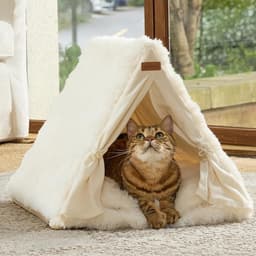
FUKUMARU Cat Cave Bed, Sturdy Frame Washable Cat Tent Bed with Curtain
A semi-enclosed cat cave with a curtain, giving an anxious cat a fully-hideable den instead of squeezing somewhere hard to reach under furniture.
- ✓ Semi-enclosed curtain for full hideaway option
- ✓ Sturdy frame holds its shape
- ✓ Machine-washable cover
- ✕ Larger cats may want to size up

Pet Honesty Vet Backed Cat Calming & Anxiety Relief Chews, Chicken, 300ct
L-theanine and chamomile calming chews for cats with known noise anxiety — introduce on a calm night first, then use ahead of the fireworks itself.
- ✓ L-theanine and chamomile formula
- ✓ Large 300-count bag lasts a long time
- ✓ Dual-texture chews cats tend to like
- ✕ Best introduced on a calm night before using it for an actually stressful one
Why Fireworks Hit Cats So Hard
Cats have far more sensitive hearing than we do, and fireworks are loud, sudden, and completely unpredictable in timing and direction — there's no pattern for a cat to learn and relax into, the way they might with a predictable noise. The instinctive response is almost always to flee and hide, which is exactly the combination that leads to cats bolting out of open doors, squeezing behind appliances, or getting stuck somewhere they can't back out of in a panic. The goal for the night isn't to stop them from being scared — that's not really possible — it's to make sure "scared" doesn't turn into "lost" or "hurt."
Before Dark: Set Up the Space
Do this earlier in the day, well before the first stray firework goes off at dusk:
- Pick one room as the designated safe space — ideally an interior room with no windows facing the street, since window-facing rooms carry more noise and light from outside fireworks.
- Move the litter box, food, and water into or near that room, away from any windows. A stressed cat often won't cross an exposed, loud area to reach the litter box, which leads to accidents that have nothing to do with bad behavior and everything to do with fear.
- Set up a secure hiding spot inside that room — something fully enclosed, not just a bed. A covered cat cave or den gives a cat the option to disappear completely, which matters more than how comfortable the bedding is.
- Close windows and curtains to cut down on both the sound and the flashing light.
- If you have one, start a Feliway-style pheromone diffuser in that room several hours — ideally a full day — ahead of time. Synthetic feline facial pheromones work gradually, not instantly, so plugging it in at 11pm once the noise has already started is too late to help much.
During the Fireworks: Low Stimulation, Not More Attention
It's a natural instinct to want to comfort a scared cat — pick them up, pet them, talk to them reassuringly. For most cats, this makes things worse, not better. A cat in full flight-or-freeze mode isn't comforted by handling; it reads as one more thing happening to them that they can't control, and a scared cat is also more likely to scratch or bite out of pure reflex, not aggression. The better move is to let them choose their hiding spot and leave them to it — check in quietly without forcing interaction, and let them come to you if and when they want contact.
A TV, white noise machine, or just normal background music at a moderate volume can help mask the sharper, more startling crack of fireworks outside. Keep the lights on at a normal level rather than dark — total darkness with sudden flashes through the windows is worse than consistent, moderate lighting.
Products Worth Having Ready
A few things genuinely help if you set them up ahead of time rather than scrambling at 9pm. FELIWAY Classic's diffuser refill releases a synthetic version of the pheromone cats produce when they rub their face on furniture to mark it as safe territory — it's not a sedative, it just helps the room itself read as calmer, and it's worth having plugged in for the whole week around New Year's, not just the one night. A proper covered cat cave, with a semi-enclosed curtain design, gives an anxious cat a fully-hideable space that's a real step up from "under the bed," which can put them somewhere hard to reach if you need to check on them. And for cats with a known history of noise anxiety, calming chews with an L-theanine and chamomile formula, given earlier in the evening before fireworks typically start, can take the edge off for cats who get especially wound up — just introduce any new calming product on a quiet night first, not for the first time during the actual fireworks.
Other Risks Worth a Quick Mention
- Alcohol — if you're hosting, keep drinks off low tables; even a small amount of spilled alcohol is dangerous to cats.
- Confetti and ribbon — party supplies left on the floor are a swallowing and choking risk, same logic as Christmas tinsel.
- The front door — same as Halloween, repeated door traffic from guests arriving and leaving is a real escape risk; keep your cat in their safe room rather than loose during a party.
Our pick
The single biggest thing you can do for your cat on New Year's Eve is set up a secure, enclosed hiding space with food, water, and litter nearby — hours before the noise starts, not after. Beyond that, the job is mostly about leaving them alone to cope in their own way rather than forcing comfort on a cat who isn't ready for it.