
 Cats
 Birds
 Fish & Aquatics
 Reptiles
 Small Pets
 Horses
 Article
 Dogs
Dog Halloween Safety: The Real Hazards (and How to Actually Avoid Them)
Candy, costumes, and a parade of strangers at your door make Halloween one of the riskiest nights of the year for dogs — here's what actually matters.
Published October 10, 2026
Halloween isn't like other holidays. There's no single big meal, no one loud midnight moment — just hours of strangers walking up to your door, over and over, while a bowl of genuinely toxic candy sits in easy sniffing range. Animal shelters consistently report a spike in lost-dog intakes around October 31st, and it has nothing to do with dogs getting clumsier once a year. It's the predictable result of a night built around the two things that most reliably make a dog bolt or get sick: a door opening again and again, and candy within reach. Here's what's actually worth planning for, and what you can mostly let go of.

ICEFANG Tactical Dog Harness for Large Dogs, Reflective No Pull Dog Vest
A front-hook harness with a grab handle gives you real control at the exact moment a dog is most likely to bolt past you and out the door.
- ✓ Front-hook and back D-ring for no-pull control
- ✓ Sturdy metal buckles that are hard to slip out of
- ✓ Control handle on top for grabbing quickly at the door
- ✕ Bulkier than a flat collar, not ideal for tiny breeds
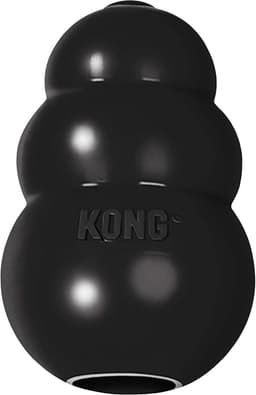
KONG Extreme Dog Toy, Durable Natural Rubber Chew, for X-Large Dogs
A frozen, stuffed KONG keeps a doorbell-stressed dog occupied and licking instead of pacing or barking every time it rings.
- ✓ KONG's most durable natural rubber, built for power chewers
- ✓ Hollow core can be stuffed with kibble, peanut butter, or treats for extended play
- ✓ Erratic bounce keeps dogs engaged during fetch
- ✕ Premium price for a single toy compared to multi-packs
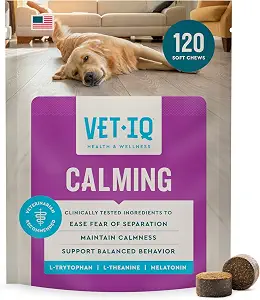
VetIQ Calming Support Chews for Dogs, Anxiety Relief, 120ct
Vet-formulated calming chews started a few days before Halloween can take the edge off a dog who struggles with repeated stranger visits.
- ✓ Vet-formulated, made in USA
- ✓ Chicken flavored, dogs take it like a treat
- ✓ Good for recurring situational stress, not just one night
- ✕ Takes consistent use to see full effect, not instant
The Night Dogs Go Missing
If you only prepare for one Halloween risk, make it this one. Every doorbell ring is a chance for a dog to slip out past a trick-or-treater, a parent, or an armful of candy bowls — and it happens over and over for hours, not once. Costumed strangers, kids in masks, and a steady stream of unfamiliar smells and sounds put a lot of dogs on edge even before the door opens, which makes them more likely to panic and run the second it does. A dog who's perfectly fine on a normal evening can act like an entirely different animal once the fortieth stranger of the night shows up at the porch.
- Keep dogs in a separate room, behind a gate, or on a secure leash whenever the door is in regular use — not just "mostly closed off."
- Double-check that collars and harnesses are snug enough that a panicked dog can't back out of them, and that ID tags and microchip info are current before the night starts.
- If your dog is going to be anywhere near the door, use a harness built to resist slipping rather than relying on a flat collar alone.
- Consider a visual barrier (baby gate, exercise pen, or closed door) in addition to a verbal "stay" — adrenaline beats training in the moment.
What's Actually in the Candy Bowl
Not all candy hazards are equal, and it's worth knowing which ones are an emergency and which ones are just unpleasant. Chocolate contains theobromine, which dogs metabolize far more slowly than people do — darker and more concentrated chocolate (baking chocolate, dark chocolate) is more dangerous than milk chocolate, but none of it is truly safe. The one that catches even careful owners off guard is xylitol, the sugar substitute used in sugar-free gum and some candies: it's severely toxic to dogs in very small amounts, triggering a rapid insulin release that can cause dangerous blood sugar crashes within thirty minutes. Beyond the ingredients themselves, wrappers and foil are their own hazard — dogs that gulp candy don't stop to unwrap it first, and foil or cellophane can cause choking or a GI obstruction that needs surgery to fix.
- Store the candy bowl somewhere your dog genuinely cannot reach — not just "up high," since counter-surfers and jumpers exist.
- Check labels for xylitol (sometimes listed as "birch sugar") before assuming sugar-free candy is the safer option for an accidental taste.
- If you know or suspect your dog ate chocolate or anything xylitol-sweetened, call your vet or an animal poison control line immediately rather than waiting to see if symptoms show up.
- Do a quick floor sweep after trick-or-treaters leave — dropped wrappers and stray pieces are easy to miss in the dark.
Costumes: Cute for You, Possibly Miserable for Them
A costume photo is a nice tradition, but it's worth watching your dog's actual reaction instead of assuming they're fine because they're not actively fighting you. Tight elastic, hoods that block peripheral vision, and layered fabric can cause overheating fast, especially on a dog that's already stressed from door traffic. Restricted shoulder or leg movement changes how a dog walks and can make them more prone to trip, slip, or feel physically cornered in a way that raises anxiety. Watch for the real tells: a tucked tail, pinned-back ears, frantic attempts to scratch or chew the costume off, freezing in place, or panting that doesn't match the temperature. Any of those means it's time to take it off, no matter how good the photo would have been. (If costumes are your thing and your dog genuinely tolerates one, our picks for dog Halloween costumes has ideas — this guide is about the safety side, not which one to buy.)
Jack-o'-Lanterns, Candles, and the Lower-Stakes Stuff
A few Halloween staples get more worry than they deserve, and a couple of overlooked ones deserve more attention. Lit jack-o'-lanterns and candles are a real but manageable hazard — a wagging tail or an excited spin near a porch step can knock one over, so keep open flames out of tail-sweep range or switch to battery candles. Glow sticks and glow jewelry are genuinely low-risk: the liquid inside is mildly irritating if a dog bites through one, usually causing drooling and unpleasant taste rather than a true emergency, though it's still worth rinsing their mouth and calling your vet if it happens. The bigger, easy-to-miss risk is just general overstimulation — a full evening of unfamiliar noise and traffic is tiring and stressful even without any single "incident," and it adds up.
Your Halloween Game Plan
Most Halloween emergencies come down to the same handful of preventable moments, so a little setup goes a long way. A secure, hard-to-slip harness like the ICEFANG Tactical Dog Harness gives you an actual handle to grab if your dog surges toward an open door — the front-hook and control handle matter more than it sounds like on a night with this much door traffic. For dogs who get keyed up by the doorbell cycle, a stuffed and frozen KONG Extreme in their safe room buys you twenty or thirty minutes of calm, focused licking instead of pacing by the door. And for dogs with a known pattern of holiday or stranger-related anxiety, starting a course of VetIQ Calming Support Chews a few days ahead of time (not just the night of) can take the edge off before the first doorbell even rings.
- Set up a dog-free zone away from the front door before trick-or-treaters start arriving.
- Store candy out of reach and do a nightly floor check for dropped wrappers.
- Use a secure harness if your dog will be anywhere near the door, even briefly.
- Skip or remove any costume your dog is visibly stressed by.
- Confirm ID tags and microchip details are current before the night starts, just in case.
Our pick
The single biggest Halloween risk for most dogs isn't candy or costumes — it's the open front door. Treat the doorbell like the hazard it is, keep candy genuinely out of reach, and let your dog opt out of anything that stresses them, costume included.