
 Cats
 Birds
 Fish & Aquatics
 Reptiles
 Small Pets
 Horses
 Article
 Dogs
How to Tire Out a German Shepherd Puppy Mentally
A German shepherd puppy's energy isn't just physical - this is a working breed, and a tired body with an understimulated brain is still a puppy looking for trouble.
Published October 16, 2026
German shepherds are a working breed — herding, police work, service work, search and rescue — and that heritage shows up early. A German shepherd puppy that's only getting physical exercise (fetch, running, long walks) often ends up more wound up, not less, because the body is tired but the brain never got a turn. The other complication with this breed specifically is that puppies shouldn't be doing high-impact exercise or long runs while their joints are still developing, which makes mental work even more important as the primary outlet in the first year. The good news: a German shepherd puppy's intelligence that makes it a handful also makes it fast to engage with the right kind of puzzle.
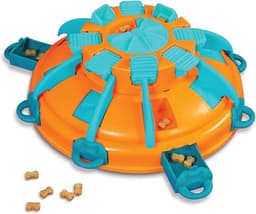
Outward Hound Nina Ottosson Tower of Treats Dog Toy Treat Puzzle, 12.5"
Twenty-eight hidden compartments across a multi-level tower — built for the rare dog that actually needs the hardest difficulty setting from week one. Supervise rather than leaving it with an unattended heavy chewer.
- ✓ Level 4 Expert difficulty with 28 hidden compartments, sized right for a breed this food-driven and fast-learning
- ✓ Multi-level design means the dog has to work through stages rather than solving everything at once
- ✓ No BPA, and the manufacturer markets it as easy to clean
- ✕ Not a toy to leave with an unsupervised puppy that is still in a heavy chewing phase - it is plastic, not rubber
- ✕ Takes up more shelf space than a simple treat ball
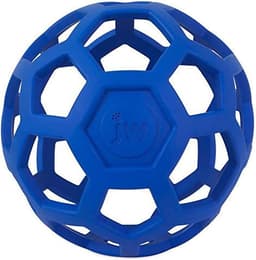
JW Pet HOL-ee Roller Dog Puzzle Ball, XL 7.5in, Natural Rubber
A tough rubber ball with open holes for stuffing treats — durable enough to survive a teething German shepherd puppy's jaw, and it doubles as a regular fetch toy once the puzzle part is solved.
- ✓ Natural rubber holds up to a growing puppy's developing jaw strength better than plastic puzzles
- ✓ XL size is right for a breed that will be 50-90 lbs as an adult, so it is not something to size up out of in a few months
- ✓ Doubles as a fetch and chew toy, not just a treat dispenser
- ✕ Treats fall out faster than a puzzle with lids or compartments, so it is a shorter engagement per fill
- ✕ Can roll under furniture in a way that stops the game
Go Straight to the Hard Puzzle
This is a breed built for complex, multi-step tasks, and a puppy that's already food-motivated (most are) will often work through a beginner puzzle in a single sitting. Starting at the hardest commercially available level isn't overkill for a German shepherd the way it might be for some breeds — it's closer to right-sized.
Durability Matters as Much as Difficulty
A GSD puppy's jaw strength develops fast, and a toy that's mentally engaging but physically flimsy gets destroyed before it's done its job. Natural rubber construction holds up to both the chewing that happens alongside problem-solving and the normal teething that's happening at the same time.
A Daily Structure That Actually Tires the Brain
- Short (5-10 minute) training sessions two or three times a day build focus faster than one long session — a puppy's attention span is short no matter how smart the breed is.
- Avoid forced long-distance running or repetitive jumping until growth plates close (generally 12-18 months) — mental work is the safer outlet in the meantime.
- "Find it" games (hiding treats or toys around a room) cost nothing and use the same scent-and-search drive this breed was built around.