
 Dogs
 Cats
 Birds
 Fish & Aquatics
 Small Pets
 Horses
 Article
 Reptiles
Why Fireworks Hit Reptiles Differently: A New Year's Eve Guide for Snake, Gecko, and Lizard Owners
Fireworks are not just loud to a reptile, they are something it can feel through the ground, and the light they throw can quietly disrupt a schedule most species depend on.
Published October 10, 2026
New Year's Eve gets treated as a noise problem for pets, and for dogs and cats, it mostly is. For a reptile, the bigger issue is not the bang itself, it is what comes with it: vibration through every surface in the room, doors opening all night for guests, and bursts of light at exactly the hours a reptile's body expects darkness.
None of it requires drama to fix. It requires understanding why a snake or gecko reacts to fireworks differently than the family dog does.
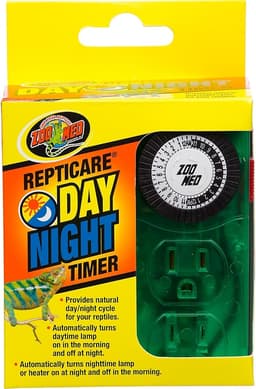
Zoo Med Repticare Day Night Timer
Keeps the light cycle running exactly on schedule no matter how late the party runs, the single best defense against photoperiod disruption.
- ✓ Dedicated reptile brand built for terrarium light cycles
- ✓ Over 2,200 reviews
- ✓ Keeps photoperiod consistent with zero manual input
- ✕ Controls only one outlet, not a thermostat

Reptile Background Film, Static Cling, Glue-Free, Desert
Blocks stray firework flashes and party movement from outside the glass for a visually calmer enclosure.
- ✓ Blocks stray light and movement through the glass
- ✓ No-glue static cling installation
- ✓ Reusable and easy to trim to fit
- ✕ Cosmetic only, does not affect temperature
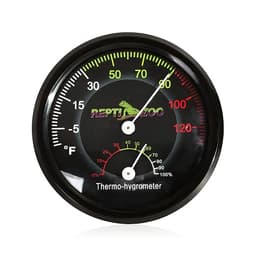
REPTI ZOO Reptile Terrarium Thermometer Hygrometer Dual Gauges
An easy next-morning check to confirm all the door traffic did not actually move the needle on temperature.
- ✓ Reads both temperature and humidity at a glance
- ✓ Over 1,500 reviews from reptile keepers
- ✓ Inexpensive enough to add a second gauge
- ✕ Analog-style dial, not a digital alarm
Why Fireworks Hit Reptiles Differently
Most pet owners think about fireworks purely as a sound problem, something loud enough to startle an animal with sensitive hearing. Reptiles experience fireworks through a different, less obvious channel: vibration. Many reptiles are highly sensitive to vibration transmitted through the ground, a shelf, or a stand, since in the wild that sense is often how they detect an approaching predator. A string of close fireworks does not just make noise near a terrarium, it can physically shake the surface the enclosure sits on, which registers as a potential threat signal in a way that airborne sound alone would not.
Does This Mean My Gecko Is Traumatized?
No, not in the way a dog can be traumatized by a thunderstorm. A reptile is not going to pace, pant, or hide under furniture for days afterward. What you are more likely to see is short-term stress behavior on the night itself: glass-surfing, staying pressed into a hide longer than usual, or a brief drop in appetite the next day. None of that is an emergency, but it is worth reducing where you can, the same way you would avoid unnecessarily startling any animal.
The Open-Door Problem at Midnight
If you are hosting guests, the same temperature-swing issue that shows up at Halloween and Thanksgiving shows up again here, usually worse, since a New Year's gathering often runs later into the coldest part of the night. Doors opening for arriving and departing guests right around midnight, combined with outdoor temperatures that are typically at their lowest for the season, can pull an enclosure's ambient temperature down more than people expect. Keep the terrarium in a room away from the main gathering if you are hosting, and if you cannot, keep that room's door closed for most of the night.
Keep the Light Schedule Normal, Even If the Night Is Not
This is the risk most owners never think about. Many reptile species regulate basking and activity cycles around a consistent light and dark schedule, called a photoperiod, far more rigidly than most mammals do. Bright flashes from fireworks outside a window, porch lights left on for arriving guests, or simply staying up later than usual with the living room lights on can disrupt that schedule for one night, and a disrupted photoperiod matters more for a reptile than it would for a dog that sleeps through almost anything. The fix is to keep the terrarium's own light timer running exactly on its normal schedule regardless of what the rest of the house is doing, and to keep the room around it as dark as the usual nighttime routine calls for once the terrarium's lights go off.
One Thing to Never Have Near the Tank
If you are hosting, keep alcohol and mixed drinks away from the terrarium entirely. A spilled drink near an enclosure is a real risk, both from the alcohol itself and from sugary mixers that can attract pests or contaminate substrate, and a crowded party is exactly the setting where a drink ends up balanced on top of a tank without anyone deciding to put it there.
Should You Cover the Enclosure for the Night?
Covering part of a terrarium with a towel or blanket during the loudest stretch of fireworks is a reasonable, low-effort option for a particularly skittish animal, as long as airflow is not blocked and the cover does not sit anywhere near a heat source. It is not a requirement for most reptiles, but for an animal that already startles easily, cutting down on sudden visual movement outside the glass for an hour around midnight can take the edge off without any real downside.
Checking In the Next Morning
The morning of January 1st is worth a normal check rather than a special one: thermometer and hygrometer readings back where they should be, water dish untouched by any spills from the night before, and the animal behaving close to its usual self. A reptile that skipped a day of basking or did not eat on cue the day after a loud night is not unusual and rarely worth alarm, but it is worth noting so you have a baseline if the same pattern shows up again next year.
Products That Help
A little automation goes a long way on the one night of the year when the house is least predictable.
- Zoo Med Repticare Day Night Timer keeps your terrarium's light schedule running exactly on time regardless of how late the party runs or how many porch lights are on, the single best defense against a disrupted photoperiod.
- Static-cling reptile background film blocks stray flashes of light and movement from outside the glass, giving a stressed animal a visually calmer enclosure during the loudest hours of the night.
- REPTI ZOO Dual Thermometer and Hygrometer makes it easy to check the next morning whether all that door traffic actually affected the tank, so you know whether any adjustment is needed.
Our pick
Fireworks affect reptiles through vibration and light far more than through sound alone, which is why the fixes look different than they would for a dog or cat. Keep the light schedule on a timer, the terrarium away from the party and the doors, and the night will pass with far less disruption than it seems like it should.