
 Cats
 Birds
 Fish & Aquatics
 Reptiles
 Small Pets
 Horses
 Article
 Dogs
Why Does My Dog Have Bad Breath? What Actually Helps (Beyond Brushing)
Persistent dog breath is almost always a dental issue, not just "a dog thing" — here's what actually causes it and where daily oral-care products fit in.
Published October 15, 2026
"Dog breath" gets treated as an inevitable fact of pet ownership, but persistent bad breath in a dog is almost always a sign of something specific happening in the mouth — most commonly plaque and tartar buildup, which left unaddressed can progress to periodontal disease. The good news is that daily habits make a real, measurable difference; the key is knowing what's actually causing the smell before reaching for a fix.
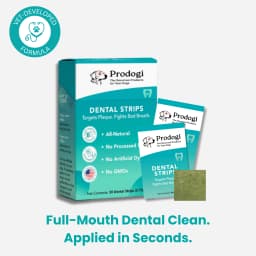
Prodogi Canine Dental Strips
Formulated by a veterinary surgeon specifically to dissolve across the whole mouth rather than just where a dog bites down, which is the real gap chews leave. It's zero-calorie and sized by weight (1 strip/day under 65 lbs, 2/day over), so it's an easy daily add rather than a treat substitute — most owners report noticing a difference in breath within the first couple of weeks of consistent use.
- ✓ Vet-formulated, with a veterinary surgeon (DVM, DACVS) as founder
- ✓ Dissolves across the whole mouth rather than just where a dog bites down
- ✓ Zero calories, useful for dogs on a restricted diet
- ✓ Daily strip is easier for some dogs to accept than brushing
- ✕ Not a substitute for brushing or professional dental cleanings
- ✕ Dogs over 65 lbs use 2 strips a day, raising the monthly cost
- ✕ Supports fresher breath over time rather than treating existing periodontal disease
The Usual Cause: Plaque, Tartar, and Bacteria
Most chronic dog bad breath comes down to the same mechanism as human bad breath: bacteria building up on the teeth and along the gumline, which produces the sulfur compounds responsible for the smell. Left alone, plaque hardens into tartar, which creates more surface area for bacteria to colonize and can eventually lead to gum inflammation and periodontal disease — at which point the breath issue is a symptom of a larger dental problem, not just a cosmetic one.
Other Causes Worth Ruling Out
- Diet — some foods and treats are simply more odor-causing than others.
- Something stuck in the teeth or gums, especially after chewing on sticks, bones, or toys.
- In rarer cases, breath that changes suddenly or smells unusually sweet, fruity, or like ammonia can point to a non-dental health issue, and is worth a vet visit rather than a home fix.
Why Brushing Alone Sometimes Isn't Enough
Daily brushing is still the single most effective thing an owner can do, but realistically, a lot of owners don't brush daily, and even consistent brushing can miss the back molars and the gumline a dog won't tolerate a toothbrush reaching. That's the gap daily chews, powders, and dissolving strips are trying to fill — not as a replacement for brushing, but as a second layer for the areas and days brushing doesn't cover.
Where Dental Strips Fit In
Unlike a chew, which is gone in seconds and only reaches the teeth a dog actually bites down on, a dissolving strip stays in the mouth longer and can reach the gumline and back teeth a chew skips entirely. That's a meaningful difference for the areas most prone to plaque buildup, even though — like any daily product — results build up over weeks of consistent use rather than overnight.
Our pick
If your dog's breath has been an ongoing issue rather than a one-off, start with an honest look at your brushing routine before adding a product on top of it — then treat a daily strip or chew as a second layer for the areas brushing misses, not a substitute for it. If breath changes suddenly or smells unusual, that's a vet visit, not a home fix.